Da Nang Food Tours: Walking, Scooter or Private Car?
Independent planning guide · How we use sources · Affiliate disclosure · Before you book ↓
Choose a walking Da Nang food tour if you want a compact route and time to notice the streets between tastings. Consider a scooter tour when you are comfortable travelling as a passenger and want to reach stops spread across different areas. A private car arrangement can suit a group that values a shared vehicle, adjustable walking and an agreed pickup. The right choice depends on the actual itinerary, dietary arrangements and pace, rather than the vehicle alone.
In this guide
- Start with the kind of evening you want
- Compare the three formats
- Understand what the menu is trying to show
- Check portions, drinks and extra spending
- Make dietary requests before payment
- Walking tours: inspect the route between tastings
- Scooter tours: clarify the passenger arrangement
- Private cars: agree what flexibility means
- A practical message to send before booking
- Build a comfortable evening around the booking
- Frequently asked questions
- Plan your next step
Start with the kind of evening you want
Before comparing listings, decide whether food is the main activity or one part of a wider evening out. A focused tasting walk can work well when you want to understand a few dishes. A longer route with several vehicle transfers may appeal when discovering different neighbourhoods matters just as much as eating.
Write down your preferred start and finish, your willingness to walk, and whether you want a substantial meal or smaller tastings. Tell the organiser if your party includes children, someone who needs frequent seated breaks, or people with different comfort levels around traffic. A description such as “suitable for everyone” should lead to specific questions about the route.
Keep the rest of the evening realistic. Booking dinner immediately after an unspecified food tour may leave you with too much food and too little flexibility. Equally, a few small samples may not replace the meal you had expected. Ask what a typical participant receives before deciding what to eat earlier.
Compare the three formats
| Format | Useful when you want | Main details to verify |
|---|---|---|
| Walking | A compact area, street-level observation and fewer vehicle changes | Total walking, crossings, seated stops and the final location |
| Scooter passenger | A guided route linking stops that are farther apart | Who drives, passenger arrangements, helmet fit and weather plan |
| Private car | One vehicle for your party and a route discussed in advance | Vehicle size, stop access, guide role and how much walking remains |
The categories overlap. A car tour can still involve a substantial market walk. A scooter experience can include long periods sitting at food stalls. A walking tour may begin at a meeting point that requires a separate taxi from your hotel. Compare the actual sequence rather than assuming the category describes every part of the evening.
Private also needs a definition. Ask whether the vehicle, guide and food stops are reserved only for your party. A private transfer to a shared tasting event is different from a fully private guided route. Neither arrangement is automatically better, but the listing should make the distinction clear.
Understand what the menu is trying to show
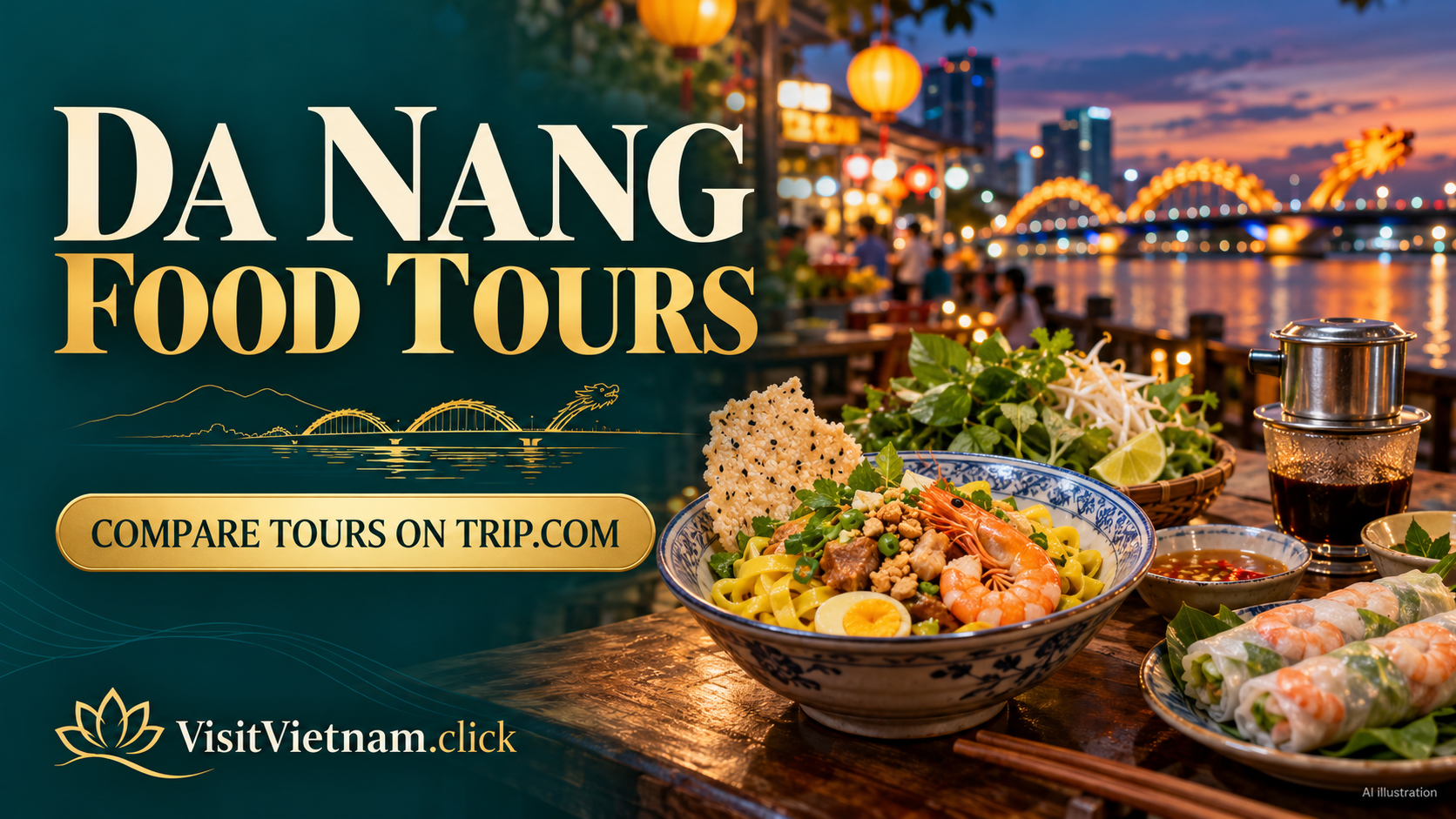
Da Nang's official tourism portal describes mì Quảng as a regional dish made with rice noodles, herbs and different possible meat or seafood preparations. That variety is useful context for a food tour: the name of a dish alone does not identify every ingredient or make it suitable for a particular diet. See the official mì Quảng introduction, checked on 24 October 2026.
Ask whether the itinerary focuses on regional specialities, everyday snacks, a market introduction or a mixed selection. A coherent menu with explanations can be more rewarding than a long list of stops that repeat similar dishes. You might prefer a noodle dish, a contrasting savoury tasting, something sweet and a drink, rather than several versions of one course.
Treat published menus as questions to confirm, especially when the listing allows substitutions. Ask who chooses replacements if a vendor is closed and whether the alternative serves a similar purpose. The aim is to understand the experience you are buying, rather than to insist that every food stall operates exactly as pictured.
Check portions, drinks and extra spending
“Includes food” can describe very different arrangements. Confirm whether each person gets an individual portion, a shared plate or a small tasting. Ask how many substantial dishes are planned and whether the organiser expects participants to arrive hungry. This is particularly useful when one person in your group has a smaller appetite.
Separate included drinks from optional drinks. Ask whether water is provided, whether a coffee or soft drink forms part of the tasting, and which extras are paid directly to vendors. You do not need a price guarantee for every possible purchase; you do need to know whether the quoted total covers the intended experience.
Use a simple comparison sheet with the same party size for every listing. Record the tour price quoted to you, included tastings, included transport, possible extras and the final drop-off. Leave live amounts blank until you have a current quote. A low headline figure becomes less informative when important parts of the evening are separate.
Make dietary requests before payment
Send dietary requirements before booking and ask for a clear response about the proposed route. Distinguish a preference from an allergy or a strict exclusion. “No seafood” may mean different things to different people unless you explain whether sauces, stock and shared preparation matter to you.
Ask the organiser which stops can accommodate your request and where they cannot confirm ingredients or handling. A substitute dish is useful only when it meets your actual requirement. Do not treat an enthusiastic but general answer as a guarantee that every vendor has been checked.
For a mixed group, ask whether everyone follows the same menu or whether separate dishes can be arranged without splitting the tour. Families may also want to confirm non-spicy options and whether children share adult portions. If a requirement is essential and the organiser cannot answer specifically, choose a different arrangement rather than relying on an improvised solution during the tour.
Walking tours: inspect the route between tastings
A walking food tour is appealing when you enjoy the street itself as part of the experience. Ask for the approximate route area and the longest continuous walking segment. Total distance is useful, but it does not explain whether the group can rest between stops or whether some segments involve stairs or uneven surfaces.
Confirm whether market visits are included and how busy the proposed setting may be. If you use a mobility aid or have limited walking tolerance, ask about the actual entrances and paths rather than accepting a broad accessibility label. The organiser should explain what they can verify and what remains uncertain.
Discuss the finish as well as the start. Ending at a dessert stop in a different area can be perfectly reasonable, provided you know how you will return to your hotel. Save the meeting point and organiser contact separately from your booking confirmation so the information is easy to find while out.
Scooter tours: clarify the passenger arrangement
A scooter food tour should make it clear whether you ride as a passenger with an assigned driver or are expected to drive yourself. These are different activities. If you want a passenger experience, say so explicitly and ask who will be driving each person in your party.
Before reserving, discuss helmet fit, how passengers and drivers communicate, what happens in rain, and the arrangements for children or anyone uncomfortable on two wheels. Ask how the organiser handles a participant who wants to stop riding after the tour begins. These questions help you evaluate the practical plan without assuming a particular answer.
Check the operator's terms and your own insurance wording for the exact activity. Do not rely on the phrase “insurance included” without understanding what it refers to, who provides it and how questions or claims are handled. Requirements and cover depend on the activity and policy; this guide does not establish your eligibility or insurance protection.
Private cars: agree what flexibility means
A private vehicle can simplify group coordination, but flexibility should be agreed before the evening starts. Ask which parts of the menu and route can change, how late changes are handled, and whether extra stops affect the quoted arrangement. An open-ended promise to “go anywhere” is less useful than a realistic agreed plan.
Confirm whether the person accompanying you is a food guide, a driver, or someone performing both roles. Ask whether explanations happen at every tasting and whether the guide helps with ordering. A private car with transport only should be compared with other transport-only options, rather than with a fully guided food experience.
Give the organiser your party size and any luggage or equipment you intend to carry. Ask about vehicle capacity and the final pickup point at each stop. If you need a child restraint or another specific arrangement, confirm it directly rather than assuming it is available.
A practical message to send before booking
You can adapt this message to any format:
“Hello, we are planning a Da Nang food tour for our party on our travel date. We prefer [walking / scooter passenger / private car]. Could you confirm the start and finish locations, the amount of walking, the usual tastings and portion sizes, and which drinks are included? Our dietary requirements are [details]. Please explain which stops can accommodate them and any limitations. We would also like to know the weather plan, transport arrangements and the conditions for changes or cancellation. Thank you.”
Send the details in one message so the organiser can answer the whole situation. Keep the response with the listing and booking confirmation. If the reply leaves an essential point unresolved, follow up before payment.
Build a comfortable evening around the booking
Use your confirmed start time to plan the afternoon. Leave enough time to reach the meeting point from your actual hotel entrance, and avoid arranging a tight connection immediately before the tour. Your hotel area, the pickup zone and the first tasting location may be different places.
A useful personal plan has three parts: arrival at the meeting point, the tour itself, and the return afterwards. Keep the final section simple. If your party wants to continue exploring, agree whether everyone stays together or whether some people will return earlier.
Da Nang's official tourism programme also uses “Food Tour” for city culinary promotion and events. A dated festival announcement is not evidence that a particular bookable tour operates on your travel date. The official 2026 culinary festival introduction, checked on 24 October 2026, is background about the city's food identity rather than your booking confirmation.
Frequently asked questions
Is a walking or scooter food tour better for first-time visitors?
Choose according to your comfort and the itinerary. Walking can suit a compact route; a scooter passenger arrangement can connect more widely separated stops. Compare the guide, tastings, pickup and pace before choosing either.
Does a private food tour include all meals and transport?
Only the specific listing and confirmed terms can establish that. Check whether the price includes the guide, vehicle, tastings, drinks, pickup and return. Private describes the arrangement, not a universal list of inclusions.
Can a Da Nang food tour accommodate dietary requirements?
Some arrangements may be able to adapt, but you need a specific answer for your requirements. Ask before payment, explain ingredients and preparation concerns clearly, and do not assume that every stop can provide a suitable alternative.
Plan your next step
Choose the format that lets your party enjoy the food at a comfortable pace, then check the actual inclusions and written arrangements. You can compare tours on Trip.com and use the VisitVietnam.click travel guides to plan the rest of your stay.
Affiliate link: we may earn a commission if you book through this link.
Reference links
Sources checked 2026-10-24. Reconfirm service-specific arrangements for your travel dates.
Questions & travel notes
Ask about this guide or share a useful travel detail. Comments are reviewed before publication. This discussion is hosted by VisitVietnam, independently of Facebook.