Vietnam food guides / Da Nang
Scheduled publication: · Da Nang destination guide
Da Nang Food Guide: Local Dishes & Tasting Tips
Independent planning guide · How we use sources · Affiliate disclosure · Before you book ↓
What should you eat in Da Nang? Start with mi quang, add banh trang cuon thit heo if it suits your appetite, and use seafood and banh xeo as a way to explore a different side of the destination. This Da Nang food guide helps you choose meals, group stops into a practical route and decide whether a food tour is worth booking. The aim is a satisfying day with enough time to enjoy each stop.
For a first visit, focus on Han Market and the Han River, with a separate seafood evening around My Khe. These are planning areas rather than a promise that every stall is open or every dish is sold on every street. Check individual businesses on the day and keep one nearby alternative. The suggestions below are an independent itinerary, not a restaurant ranking or a first-hand review of every kitchen.
Explore tours and activities on Trip.com. Search for Da Nang, choose your date and check whether a food experience is available. Affiliate link: we may earn a commission from qualifying bookings. This link opens a general booking starting point; it is not a reservation for a named food tour.
What to eat in Da Nang: three starting points
Mi Quang
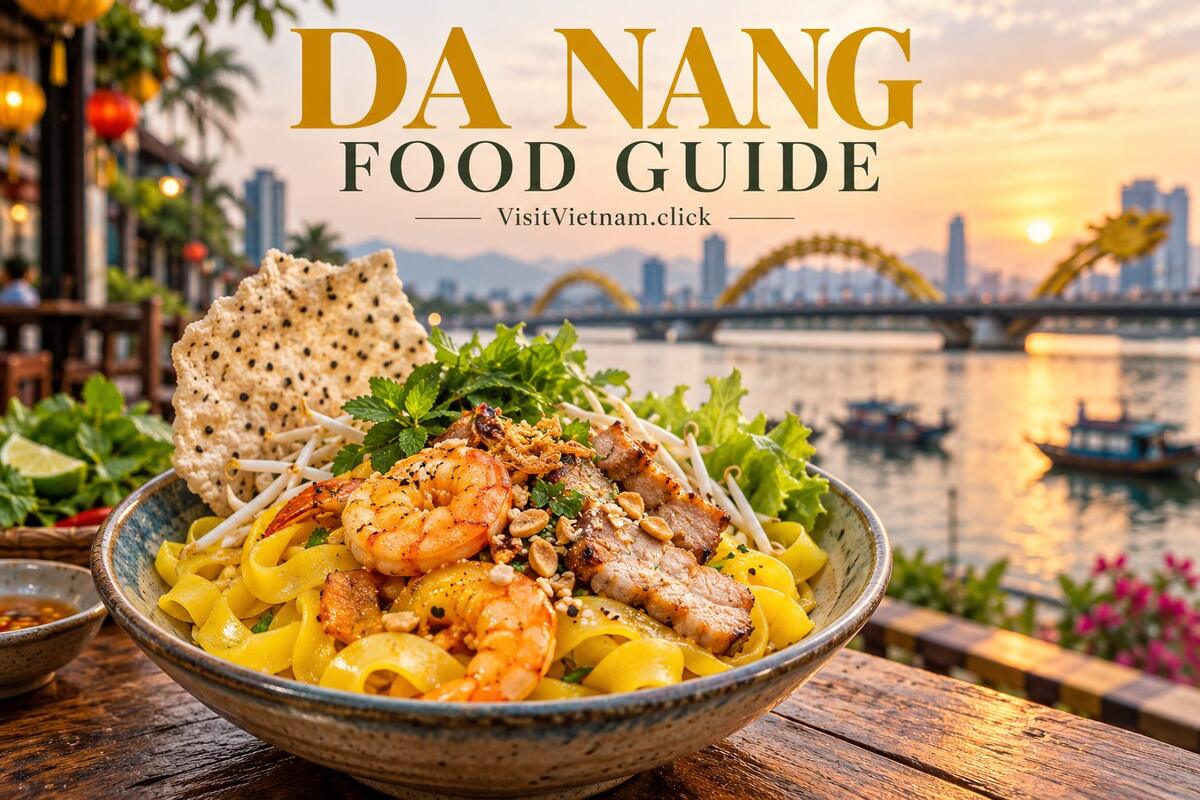
Broad rice noodles are served with a small amount of concentrated broth, herbs, peanuts and a sesame rice cracker. Chicken, pork and shrimp versions give you different entry points; ask which protein is actually in the bowl. Crush a little cracker over the noodles, mix in herbs and taste before adding chilli. This is a good lunch when you want something distinctive without committing to a long seafood dinner.
Banh trang cuon thit heo
Pork rice-paper rolls arrive as components: sliced pork, herbs, vegetables, rice paper and dipping sauce. Build a small roll first rather than packing everything into one oversized parcel. Mam nem, a fermented fish dipping sauce, is part of the character of the meal, but ask for it separately if you are unsure about the strength or have dietary restrictions.
Seafood and banh xeo
Use a seafood dinner for a slower evening rather than ordering every species on display. Confirm the weighing and cooking arrangement first. For a lighter alternative, look for banh xeo: crisp savoury pancakes eaten with greens and dipping sauce. Different establishments use different fillings, so do not assume that a pancake described as vegetable contains no shrimp or meat.
The three choices give you a framework, not a compulsory order. If you eat a substantial first meal, choose a smaller second stop. For a couple, sharing one savoury dish can make room for another flavour; for a solo traveller, a specialist shop with individual portions may be easier than a restaurant built around large shared platters. Ask before splitting a set menu or assuming it can be ordered for one.
Regional food is not a fixed recipe. The same dish can differ in seasoning, broth, topping and serving style between kitchens. Notice what is actually on your plate rather than deciding that one version is wrong because it differs from a photograph. A useful question is what the kitchen recommends today, followed by a clear explanation of anything you do not eat.
Where to eat: choose the area before the restaurant
Use Han Market and the Han River, with a separate seafood evening around My Khe as your starting map. Pin your hotel, the day's main attraction and your first meal, then check the roads between them. Avoid choosing three restaurants solely because each has a high review score if reaching them means repeatedly crossing the destination. Read recent comments for practical details such as seating, queues and payment, then confirm anything essential directly.
For an unplanned stop, look at how the food is prepared and how clearly you can understand the menu. A busy room may suggest quick turnover, but popularity alone cannot verify ingredients, hygiene or suitability for an allergy. If staff cannot explain a dish that matters to your dietary needs, choose a clearer alternative. You do not need to order simply because you have sat down to inspect a menu.
Beachfront dining versus city noodles
Choose a city-centre lunch for short walking distances and a beach-area dinner for a longer social meal. An ocean view does not identify the cooking style, and a simple noodle shop can be a better match for a quick solo lunch than a large seafood restaurant.
Choose the setting that matches the people travelling with you. A low stool, standing market counter or crowded pavement may be enjoyable for one traveller and difficult for another. Families and visitors with mobility needs should ask about seating, steps, toilets and the distance from the vehicle drop-off. A food itinerary works best when comfort is part of the selection from the beginning.
A flexible one-day Da Nang food itinerary
Start with a noodle lunch on the city side of the river, spend the afternoon exploring nearby streets, then make a separate trip to the coast for dinner. Keeping the seafood evening separate avoids a zigzag route between the city and My Khe. If rain interrupts your walk, replace the beach transfer with a covered restaurant near your hotel.
Before the first meal
Check whether breakfast is already included at your accommodation. If it is, choose a light hotel breakfast before a tasting outing rather than eating two full breakfasts. Save the names of the dishes you want to try and show the written name when ordering. Download the route or keep the hotel address available if your phone connection is unreliable.
Between food stops
Leave a genuine break between main meals. Use a walk, a cultural visit or a cafe pause to make the day feel like travel rather than a sequence of orders. Carry drinking water and choose a covered backup when rain would interrupt an outdoor route. If a stop has a long queue, use your nearby alternative instead of sacrificing the rest of the plan.
At the final stop
Decide whether you want a shared dinner or only a snack after the earlier tastings. Check the return journey before the evening becomes busy, particularly if you are staying outside the centre. Keep departure-day food plans separate from a leisurely tasting evening: a confirmed transfer and a meal requiring slow preparation do not always fit the same window.
How to order and understand the bill
Start with the portion and the pricing unit. A noodle bowl is usually easier to compare than a shared platter, a hotpot set or seafood priced by weight. Ask what comes with the dish and what counts as an extra: rice, noodles, herbs, drinks, additional toppings and side dishes may be listed separately. A short clarification before the kitchen starts is easier than resolving a surprise after the meal.
For a group, agree one person to confirm the order and repeat the number of portions. Decide whether the dishes are shared and check whether a set is intended for the whole table or a single diner. If someone adds another dish later, make sure it does not duplicate an order still being prepared. Keep a copy of the menu price or confirmation when quantities are complicated.
There is no single reliable daily food budget for every traveller in Da Nang. Build yours from the meals you actually want, then add drinks, transport and any booked activity. Compare a guided experience with the full independent outing rather than only the cost of a bowl. A tour may include guiding, transfers or a class, while a restaurant bill normally covers only what you order.
Dietary needs and ingredients to check
Explain restrictions before ordering, including ingredients used in stock, sauces and marinades. Fish sauce, shrimp paste, peanuts, egg and dairy may appear in places that are not obvious from the dish name. Vegetarian, vegan and halal requirements need a specific conversation about preparation; a photograph or a plate of vegetables is not enough to establish suitability.
Use a clearly written explanation in Vietnamese if it helps, and ask staff to confirm they understand. If an ingredient or cross-contact issue is critical, choose a kitchen able to answer your questions. Do not rely on removing a garnish after serving to change what was used in the broth or cooking oil. A guide can help translate, but cannot guarantee every kitchen's practices.
Should you book a food tour in Da Nang?
A guided outing can be useful if you want help with ordering, local context and a route chosen around several dishes. Going independently gives you more control over timing, portions and the decision to stop early. Choose based on how you like to travel. The best format for a first evening after arrival may differ from the best format for a full free day.
Before paying, compare these details in the actual listing:
- Which dishes or tastings are included, and whether substitutions are possible.
- Whether drinks, transport and entrance tickets are included or additional.
- The meeting point, finish point and hotel pickup area.
- Walking distance, seating breaks and suitability for children or mobility needs.
- The activity language, group size and arrangements for dietary requests.
- Cancellation terms, minimum participants and the operator's weather plan.
If a listed dish is essential to your decision, ask the operator whether it is guaranteed or only an example. Vendors and menus can change, and a general food tour may focus on a different neighbourhood from the one in this itinerary. Book only after the actual experience fits your dates, appetite and requirements.
Compare Da Nang experiences on Trip.com. Enter the destination and your travel date on the booking site, then read the selected listing and final terms. Affiliate link: we may earn a commission from qualifying bookings. No particular tour, price or availability is guaranteed by this guide.
Fit the food day into your wider trip
Choose accommodation around the way you want to spend your evenings, then verify the actual route to food areas. A hotel described as central may still be inconvenient for the places you select. Check recent comments about noise and access if late dinners or early departures are important to you. A room near one favourite meal is useful only if the rest of your itinerary also works.
Use our Vietnam destination guides, hotel planning guide and tour planning guide to connect meals with the rest of your visit. Keep one main sightseeing priority per part of the day and let food stops support it. If you arrive tired or the weather changes, a simple local dinner near your accommodation is a perfectly good first experience.
Frequently asked questions
What should I try first in Da Nang?
Start with mi quang if its ingredients fit your diet. It gives you a clear first choice without requiring a long tasting menu. Ask what is included in the actual serving, then decide whether to add a side dish. Save the other suggestions for another meal rather than ordering everything at once.
Can I explore the food scene without a tour?
Yes. Choose one manageable area, identify a main meal and keep an alternative nearby. An independent outing works best when you are comfortable asking about ingredients and prices. A tour is an optional way to add guidance and context, not a requirement for eating local dishes.
Does the Trip.com link book the food in this guide?
No. It opens a booking starting point where you can search for Da Nang tours and activities. Each listing has its own operator, inclusions, price and conditions. Read those details before paying; the meals in this article form an independent suggested itinerary rather than an included package.
Are these restaurant prices or opening hours verified?
This guide does not publish fixed restaurant prices or opening hours. Confirm current menus, service times and availability directly with the business or operator. The food suggestions provide context for planning, while the final decision should use information for your actual travel date.
Sources and editorial scope
Reviewed 25 October 2026. Destination food reference supports the regional food context. The route, comparison questions and ordering checklist are editorial suggestions, not claims that a named establishment has been inspected. Businesses, menus and activity terms may change. Cover artwork is an AI-generated food illustration and does not document a specific restaurant or current serving.
Questions & travel notes
Ask about this guide or share a useful travel detail. Comments are reviewed before publication. This discussion is hosted by VisitVietnam, independently of Facebook.