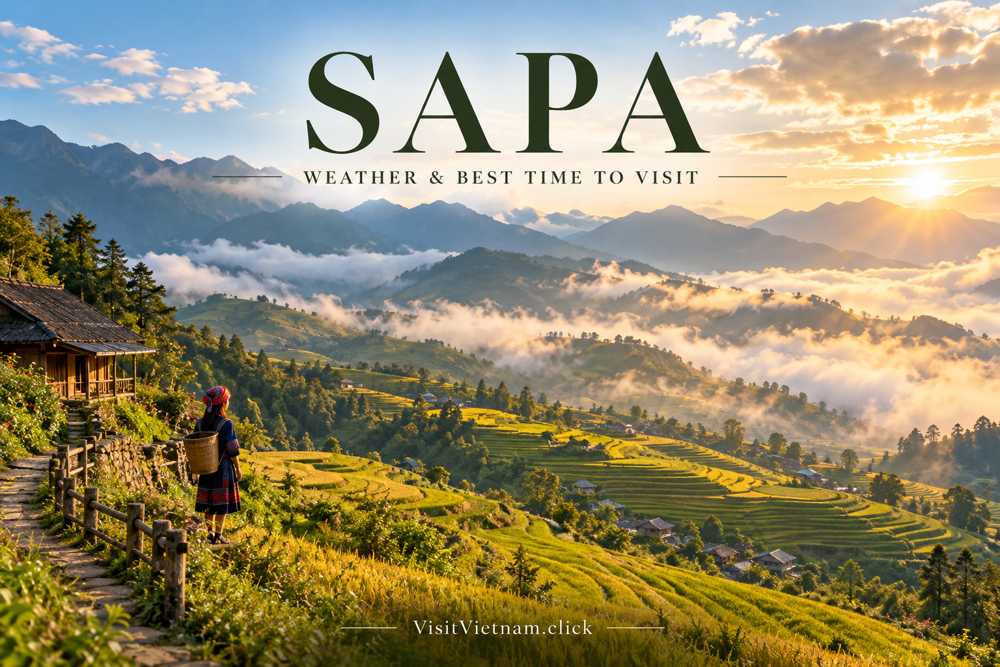
Vietnam weather guides / Sapa
Published · Destination guide
Sapa Weather by Month: Best Time to Visit
Independent planning guide · How we use sources · Affiliate disclosure · Before you book ↓
When should you visit Sapa? Start with March to May or September to November for a flexible mountain stay, then choose the exact dates around what you want to do. Sapa has a cooler highland climate, with cold winter periods and variable visibility. Spring and autumn are common starting points for a walking trip; rice colour and a clear Fansipan view are never guaranteed by a calendar month. This guide helps turn a seasonal pattern into a workable itinerary: what to put first, what to leave flexible and what to check before paying for a weather-sensitive activity.
The focus here is Terrace walks, village stays and an optional Fansipan visit. The month-by-month notes describe broad tendencies, not a forecast for a future year. They do not promise sunshine, a particular temperature or uninterrupted transport. Use the source links for climate context, then check a dated local forecast and the operator's latest advice near departure. Research checked on 26 October 2026.
Sapa weather by month: a practical calendar
This table is a planning interpretation of the tourism sources below. Conditions vary within a month and between years. The short labels deliberately avoid invented rainfall totals or precise monthly temperatures. A transition month can contain both sunny days and a prolonged wet spell; use the table to decide how much flexibility your itinerary needs.
| Month | Broad seasonal tendency | How to use it |
|---|---|---|
| January | Cold; mist and frost possible | Check the forecast before fixing outings |
| February | Cold; pack warm layers | Check the forecast before fixing outings |
| March | Milder transition | Check the forecast before fixing outings |
| April | Mild; walking window | Check the forecast before fixing outings |
| May | Warmer; check rain | Keep a movable outdoor day |
| June | Wet-season trail checks | Keep a movable outdoor day |
| July | Rain; route flexibility | Keep a movable outdoor day |
| August | Rain; road checks | Keep a movable outdoor day |
| September | Autumn; local harvest varies | Check the forecast before fixing outings |
| October | Cool; walking window | Check the forecast before fixing outings |
| November | Cooler; evening layers | Check the forecast before fixing outings |
| December | Cold; mist possible | Check the forecast before fixing outings |
Choose your season around the experience
Put your main reason for visiting first
Choose a trek based on gradient, surface and the group's ability. Ask a local guide about the current route rather than booking only by distance. Shortening a walk can still leave time for village life and a shared meal without committing to exposed or slippery sections.
Where to stay when weather matters
A town hotel makes meals and transport easier, while a valley homestay puts the landscape nearer your room. Ask about the final access road, heating arrangements and the walk from drop-off. A dramatic view matters less if you cannot comfortably reach the property in wet conditions.
Before reserving, check the particular room and rate you are buying. Ask about covered arrival access, lifts or steps, air conditioning or heating where relevant, and somewhere comfortable to wait before check-in. A pool photograph is not proof of an indoor pool, and a hotel name containing beach or mountain does not establish safe access in every weather condition.
A flexible two-day Sapa plan
Use arrival day to settle in and assess conditions. Keep the main guided walk for the next suitable day and leave a second possible outdoor window. Avoid planning a demanding trek immediately after overnight travel when tiredness could compound an awkward trail surface.
Keep departure day simple
Protect your essential onward journey. A boat return, mountain drive or long excursion introduces uncertainty that a short neighbourhood walk does not. Confirm the pickup and allow a buffer suitable for the route and operator. Do not use a general travel-time estimate as a guarantee that a tight connection will work in heavy rain.
What to do if rain changes the plan
Keep a town-based cultural or cafe day as a genuine backup. Ask accommodation staff about local road conditions before changing villages. A cable-car ticket does not guarantee a panorama, so decide whether the mountain visit appeals even when cloud hides the valley.
A useful backup is specific: a venue you have checked, a way to reach it and enough time to enjoy it. Keep one close option and one longer option rather than an unfiltered list of attractions. Check whether the alternative also depends on weather; a class with an outdoor market walk or a wellness venue with uncovered facilities may need adjustments too.
When a warning or closure is in force, follow local instructions. Do not enter floodwater, bypass barriers or pressure a boat or activity operator to continue. If an activity is cancelled, keep the written notice and contact the booking provider using the terms attached to your reservation. Do not assume a general weather concern automatically triggers a refund for every independently booked part of the trip.
What to pack for Sapa
Bring layered clothing, a waterproof outer layer and walking shoes with grip. Carry spare socks in a dry bag. A light fleece is useful beyond midwinter; choose warmth for evenings and exposed viewpoints separately from clothes for walking uphill.
Before booking a weather-sensitive tour
Use the current listing to confirm the service, not an old promotional image. Ask these questions before paying:
- What is the actual meeting point and pickup area for my accommodation?
- Which activities depend on the weather, visibility or water conditions?
- What happens if the main activity is removed but the trip still runs?
- Can I change to another date, and what deadline applies?
- Who confirms a cancellation, and how will I receive the update?
- Are transfers, equipment and entrance tickets included in this rate?
Explore Vietnam destination guides and choose the local guide that fits your next stop. Use this weather article alongside your booking confirmation and a current forecast, rather than treating it as a replacement for either.
Frequently asked questions
What is the best time to visit Sapa?
Start with march to may or september to november for a flexible mountain stay. Then check whether the month suits your main activity and whether you can move an outdoor day if conditions change. A broad seasonal preference cannot guarantee one particular date.
Can I book Sapa just to see snow or golden rice?
Treat both as possibilities rather than a promised attraction. Ask about current local conditions and harvest timing; choose a trip you would enjoy without the exact photograph.
Is this a forecast for the coming year?
No. This is an evergreen seasonal planning guide. The monthly notes describe climate tendencies and editorial planning advice, not predicted conditions on a booked travel date. Check a dated forecast and official warnings near departure, especially before a weather-sensitive transfer or activity.
Sources and next steps
Destination climate and travel context. Source checked on 26 October 2026; some tourism sources use broader season boundaries than others, especially in transition months. The practical route, accommodation comparisons and packing checklist above are editorial suggestions rather than a promise from the source or an operator.
National Center for Hydro-Meteorological Forecasting for current forecasts and warnings. Read the issue time and the relevant locality; this article does not reproduce a live warning or claim that conditions are currently safe.
Ready to turn the season into a trip? Explore more Vietnam travel guides and compare accommodation and activity options for your actual dates. Keep one outdoor window flexible so the itinerary has room to improve when the weather does.
Questions & travel notes
Ask about this guide or share a useful travel detail. Comments are reviewed before publication. This discussion is hosted by VisitVietnam, independently of Facebook.